
Tata Motors (TaMo) is aiming to gain market share across its passenger vehicle (PV) and commercial vehicle (CV) businesses - targeting a 40 per cent share in CVs and a 16 per cent share in PVs by 2027. Meanwhile, it has already achieved earnings before interest, tax, depreciation, and amortisation (Ebitda) breakeven in its electric vehicle (EV) business at 1.2 per cent (up 830 basis points), ahead of its target of 2025-26 (FY26).

Road Transport Minister Nitin Gadkari on Tuesday said the government will approach the capital market next month to raise funds for four road projects. The money will be raised through Infrastructure Investment Trusts (InvITs), and there will be an investment limit of Rs 10 lakh for retail investors, he added. "We will be approaching the capital market to raise funds for the four road projects... there will be an assured return of 7-8 per cent," Gadkari said while addressing a Ficci event.

In 2024, the Securities and Exchange Board of India (Sebi) implemented significant reforms, focusing on cooling down the derivatives segment, enhancing transparency and accountability in small and midsised enterprise (SME) listings, and deepening the fund management ecosystem.

Simplifying investment policies at the micro level and introducing a time-bound framework will be critical for India's growth targets, notes Krishna Ella.
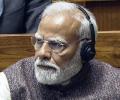
Prime Minister Narendra Modi has lauded the Union Budget as a "people's budget" that fulfills the dreams of every Indian and said that it is a "force-multiplier" that will boost consumption, investment and growth. He highlighted a host of measures for different sectors, including welfare initiatives for gig workers, tax relief for the middle class, and support for the manufacturing sector.

MFs continue to find it difficult to attract and retain long-term money from investors

Minister of State for External Affairs B Muraleedharan said India is committed to developing friendly and mutually beneficial relations with all its neighbours under its 'Neighbourhood First' policy.

'You can imagine for India what Shuks means not just to the billions of people in India but the entire Indian diaspora around the world.'

Talks on global climate finance virtually ground to a halt last week at COP29, the annual United Nations (UN) Climate Change event in Baku, Azerbaijan, as the developed world, led by the European Union (EU), and developing countries including India, Brazil, South Africa, and a clutch of island nations and African countries faced a wide chasm between their expectations. This has raised doubts about whether an agreement can be reached this week or whether talks will spill over to COP30, to be held next year in Benem, Brazil.

India's flexible (flex) office segment, having breached pre-pandemic levels, is thriving as corporates, startups, multinational corporations, and global capability centres (GCCs) expand in India, seeking low-capital yet Grade A plug-and-play facilities. In the first quarter (Q1) of 2025, the flex office segment continued to grow, with flex space leasing rising by 22 per cent to 2.2 million square feet (msf), according to Colliers.

Automotive (auto) major Mahindra & Mahindra (M&M), which is readying to launch nine sport utility vehicles (internal combustion engine/ICE), seven Born Electric Vehicles (BEVs), and seven light commercial vehicles by 2030, has outlined an investment of Rs 27,000 crore in its auto business between 2024-25 (FY25) and 2026-27 (FY27). Over the next three years, the company will deploy Rs 37,000 crore, including its auto business, farm business (Rs 5,000 crore), and service business (Rs 5,000 crore).

"The new structure will substantially reduce taxes on the middle class and leave more money in their hands, boosting household consumption, savings and investment," Sitharaman said presenting what was dubbed as 'reformist' budget for the next fiscal in Lok Sabha.

Terming investment in infrastructure "quintessential" to boost growth, the Economic Survey on Friday said post unlocking of the economy, infra sectors are poised for growth and construction of roads is expected to return to the high pace attained before COVID-19. The infrastructure sector will be the key to overall economic growth and macroeconomic stability, the Survey said emphasising that the year after the crisis (2021-22) will require sustained and calibrated measures to facilitate the process of economic recovery and enable the economy to get back on its long-term growth trajectory. "Basic infrastructure facilities in the country provide the foundation of growth. In the absence of adequate infrastructure, the economy operates at a suboptimal level and remains distant from its potential and frontier growth trajectory.

India and the US on Monday committed to further improving bilateral ties, exploring alternate mechanisms for funding renewable energy and actively pursuing the G20 agenda which includes strengthening MDBs and taking coordinated action to deal with climate change. Several issues, including climate action, rising indebtedness in low and middle income countries and digital public infrastructure, figured during a bilateral meeting between Finance Minister Nirmala Sitharaman and US Treasury Secretary Janet Yellen held on the sidelines of the G20 meeting of Finance Ministers and Central Bank Governors. India, Sitharaman said, will "look forward to furthering ... bilateral interests through development cooperation and new investment opportunities through Alternate Investment platforms for renewable energy."

India's economy is likely to grow by 6.5 per cent in the current and the next financial year, an EY report said, attributing lower than anticipated expansion in the September quarter to fall in private consumption expenditure and gross fixed capital formation. Real GDP growth eased to a seven-quarter low of 5.4 per cent in July-September -- the second quarter of the current 2024-25 fiscal year.

Highly-rated finance firms and housing finance companies are expected to benefit from the absence of Housing Development Finance Corp (HDFC) from the bond market once it merges with the HDFC Bank in early FY24. Post merger, the bond market is expected to become less crowded, which will ease fund raising conditions for other players in the field. It may perhaps also compress the spread for debt instruments floated by housing finance companies (HFCs) over 10-year government bonds, subject to demand and supply conditions.

'Amaravati will be a game changer for Andhra Pradesh.'

The government had committed to increasing spending in infrastructure

Many states are realising that hosting mega events puts the spotlight on them and raises their profile.

Logistic players have seen a sharp correction at the bourses over the past six months as intense competition from new-age-tech startups, higher freight rates, and weak macros dented listed players' growth outlook. Analysts warn that the emergence of tech-based startups could weigh on organised players' profit-pool, and can potentially erode their market share. Thus, a stock-specific strategy would be prudent at this juncture with focus on companies that are rapidly innovating and investing in technology.

The need for a manufacturing policy, reining in food inflation and raising investment in the country were among key suggestions given by economists who met Finance Minister Nirmala Sitharaman and senior ministry officials in the first round of pre-Budget consultations on Friday.

Households are likely to remain the primary net lenders to the economy in the coming decades.

The value of private equity (PE)-backed mergers and acquisitions (M&As) in India reached a six-year low during the first seven months of the current calendar year, amid ongoing global uncertainties. The total value of these deals stood at $6.2 billion during the period, down from $9 billion in the same period last year, and lower than the $14 billion recorded during the corresponding period in 2019, according to data from LSEG Deals Intelligence. PE funds pool capital from investors, including high-net-worth individuals, to invest in high-return opportunities.

This includes over $15 billion of proposed investment in the infrastructure sector in the Indo-Pacific and $9 billion for shoring up American defence in the region.

Putin is keen on establishing a good personal rapport with Trump and anchor a meaningful US-Russia partnership, realistic enough to accept that Trump is as good an American president as Russia would ever get, observes Ambassador M K Bhadrakumar.

Ajay Piramal bets highly on infrastructure, realty

Global funds, according to Christopher Wood, global head of equity strategy at Jefferies, are now beginning to pay more attention to India with the market now offering 30 companies with a market capitalisation over $25 billion.

The most striking features of this Budget was its focus on simplification and improving the ease of doing business in India, asserts Kaku Nakhate.

The majority have stayed away from getting into cash handling.

For development finance institution to succeed now, the government must stand like a rock behind it and be patient.

This sort of property is better suited for an investor rather than an end user.

'India enjoys conventional superiority, but nuclear deterrence imposes clear boundaries.'

The Confederation of All India Traders (CAIT) representing 70 million traders has written to Union Commerce Minister Piyush Goyal, drawing his attention to the alleged violations of laws and regulations by quick commerce (qcom) companies.

The Cabinet has cleared a Bill to set up a government-owned development finance institution (DFI) with initial paid-up capital of Rs 20,000 crore so that it can leverage around Rs 3 trillion from the markets in a few years to provide long-term funds to infrastructure projects as well as for development needs of the country. To put it in perspective, Rs 3 trillion constitutes slightly less than 3 per cent of the Rs 111 trillion to be spent on over 7,000 projects in the National Infrastructure Pipeline from 2019-20 to 2024-25. Besides, the government will give Rs 5,000 crore as grant to the institution, Finance Minister Nirmala Sitharaman on Tuesday told the media after the Cabinet meeting.

Govt to chalk out entry of sovereign funds from Abu Dhabi, Qatar into such projects.

If it was Andhra Pradesh last Budget, it's poll-bound Bihar that has now turned to Centre with a list of demands. How the NDA government is delivering on promises.

What made the tide turn in favour of the Adani group was the Covid-19 pandemic, which shut down airports the world over, including Mumbai. There was no cash flow and the firm started defaulting on salaries July onwards.

The government, under the Finance Act, 2020, had allowed tax exemption for SWFs and pension funds in the case of incomes from investment in 34 key infrastructure sectors, including hotels, cold chains, educational institutions, hospitals, and gas pipelines.

Finance Minister Nirmala Sitharaman's Budget proposals lay out a comprehensive road map for transforming India into a developed nation, focusing on key priorities that aim to generate ample opportunities for all citizens in "Viksit Bharat". It sets the stage for sustained economic growth, social development, and technological advancement.
Whilst substantive public allocations have been made in the infrastructure sector, this strategy is plateauing due to the fiscal deficit constraint, capacity limitation of statal implementing agencies, the declining ability of PSUs, and the precarious situation of the Railways' operating ratio. It is, thus, high time to get the policy compass to point at rejuvenating private sector investments in infrastructure, says Vinayak Chatterjee.
